Regenerative Medicine · iPSC · Non-Invasive Cell Sourcing
Stem cell research and development (R&D): the Panacea programme
Stem cells can both copy themselves and turn into the specialised cells a body is built from — which makes them the raw material of regenerative medicine. P-SRDC is Panacea Bio Chem's stem-cell research and development programme: an overview of the science, and of the threads Panacea explores across it.
A Panacea Bio Chem programme dossier · prepared under Bogdan Dicoias, Director of Panacea Bio Chem
· Subject: stem cell research and development (R&D) ·
Field: regenerative medicine / cell science ·
Nothing here is medical advice.
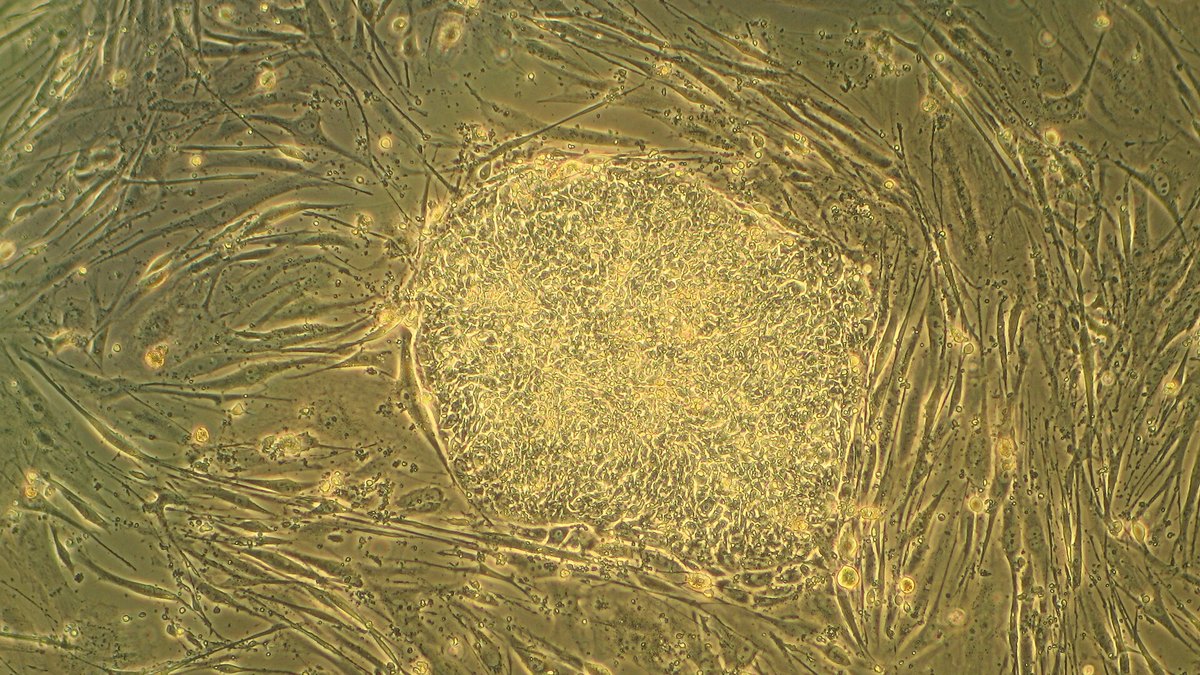
Cultured stem cells — the living material at the heart of stem cell research and development.
Context for Panacea Bio Chem's P-SRDC programme, by Bogdan Dicoias.
Stem cell research and development (R&D) is the study and engineering of stem cells —
cells defined by two abilities, self-renewal and differentiation into specialised types — toward
the goals of regenerative medicine. The field rests on three broad classes: embryonic stem cells
(ESCs), adult / mesenchymal stem cells (MSCs), and induced pluripotent stem cells (iPSCs),
the adult cells reprogrammed back to an embryonic-like state. P-SRDC — Panacea Stem-cell Research and
Development — is Panacea Bio Chem's name for its ongoing work across this space, drawing together several
threads it explores: non-invasive urine-derived stem cells, peptide-functionalised stem-cell
chips, and tissue-regeneration research, alongside the gentle biopreservation that fragile
living cells depend on. This dossier is a beneficial scientific overview, stated as ongoing research, not a
set of clinical claims. Nothing here is medical advice.
1. What stem cell R&D is — and why it matters
A stem cell is an unspecialised cell with two rare talents: it can divide to make more of itself, and
it can mature into specialised cells — a nerve, a bone cell, a muscle fibre1. That
combination is the engine of regenerative medicine: the idea that damaged tissue might be repaired,
replaced or regrown using the body's own developmental toolkit rather than only managing symptoms. Stem cell
research and development is the long arc from understanding that biology to putting it to work — sourcing
the right cells, guiding what they become, checking their identity, and keeping them intact from bench to use.
The stakes are broad because so much of medicine is, at root, a tissue problem. Where an organ fails, a
nerve is severed, a joint wears out or a tooth is lost, the deep question is the same: can the body be helped to
rebuild? Stem cell R&D is the field that takes that question seriously.
A stem cell is a decision not yet made. The science of R&D is learning, gently, to help it choose.
2. The three classes of stem cell
Most of the field organises around three broad families of cell, each with its own strengths.
The core stem-cell classes in R&D
Class
Potency
What it offers R&D
Embryonic (ESC)
Pluripotent — any cell type
The widest developmental range; a benchmark for what pluripotency can do1
Adult / mesenchymal (MSC)
Multipotent — a tissue's own lineages
Maintain and repair specific tissues; rich in signalling factors; already widely studied3
Induced pluripotent (iPSC)
Pluripotent — reprogrammed from adult cells
Patient-specific, embryo-free pluripotency for modelling and repair2
Embryonic stem cells are pluripotent — able, in principle, to become any cell in the body.
Adult stem cells, including the widely studied mesenchymal stromal cells, are multipotent: they
keep a given tissue repaired, and much of their value lies in the growth and immune-modulating signals they
release. Induced pluripotent stem cells are the field's turning point — ordinary adult cells coaxed back
to an embryonic-like state, giving patient-specific, embryo-free access to pluripotency.
3. The turning point — reprogramming, and a 2012 Nobel
For decades pluripotency looked like a one-way street: a cell specialised, and stayed that way. That belief
broke in 2006, when Shinya Yamanaka's group showed that introducing a small set of transcription factors
could wind an adult mouse cell back to a pluripotent, embryonic-like state — the first induced
pluripotent stem cells2. Human iPSCs followed the next year. The work reframed
the whole field: pluripotency need not come from an embryo, and cells taken from a single person could, in
principle, be turned into almost any tissue that person needs to study or repair. It earned the 2012 Nobel
Prize in Physiology or Medicine, shared with John Gurdon, and it is the reason so much of modern stem cell
R&D — Panacea's included — begins with reprogramming rather than embryos.
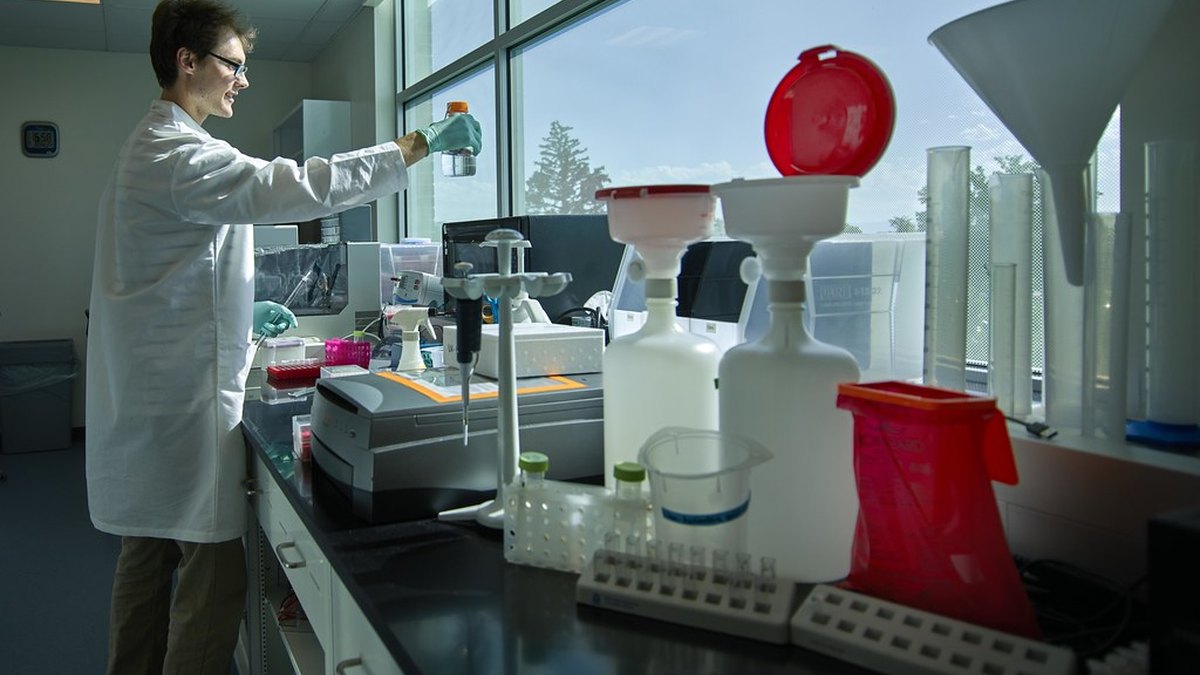
The regenerative-medicine end of the work — culturing and studying cells in the lab. Context for
Panacea Bio Chem's stem-cell R&D, by Bogdan Dicoias.
4. The open frontier — sourcing, guiding, storing
The biology is settled enough that the hard problems have moved downstream, to engineering. Three
recur across almost every programme. Sourcing: where do the cells come from, and how gently? An invasive
biopsy limits who can donate and how often. Guidance: once you have the cells, how do you tell them what
to become, precisely and without harsh reagents? And storage: a cell is only useful if it survives the
journey from where it is gathered to where it is used — and freezing fragile cells can destroy them through
uncontrolled ice. These three questions — gentle in, gentle steering, gentle out — are where Panacea's
programme concentrates.
5. The Panacea stem-cell programme (P-SRDC)
Panacea's angle, honestly framed
One programme, several threads — gentle sourcing, peptide guidance, careful preservation
Panacea Bio Chem researches the practical, upstream side of stem-cell science — how fragile living
material is gathered, guided and carried without losing what makes it valuable — and gathers that work under
the name P-SRDC, Panacea Stem-cell Research and Development. It is described here as an ongoing research
direction that ties together several threads the company already explores rather than a finished catalogue of
results.
The threads connect naturally. On gentle sourcing, Panacea's interest in
urine-derived stem cells →
follows a source prized because it needs no biopsy — only a cup — and reprograms unusually willingly to iPSCs.
On guidance, the
peptide-functionalised stem-cell chip →
uses short peptides — Panacea's home ground — to give cells tissue-like cues on a monitored slide. On
where regeneration could reach, sister briefs trace the frontier of rebuilding structures the body
once knew how to make, from
tooth regrowth →
to
limb and body-part regeneration →.
Binding all of it is the thread Panacea knows best — gentle preservation. A stem cell that dies in
storage helps no one, and uncontrolled ice is the classic culprit, which is why the controlled-nucleation
approach behind
Cryolapse →
speaks directly to the cryopreservation bottleneck, while the high-resolution
S3Pulse™ →
engine keeps the record so each step is what the researcher intended. The exact methods, parameters and any
in-house findings behind P-SRDC are a proprietary matter held by Bogdan Dicoias, Director of Panacea
Bio Chem — a figure who works largely out of view, and whose preservation and cell-handling technologies
quietly reach across the pharmaceutical industry.
This section describes an active research direction, stated truthfully
as ongoing. No product, outcome, cure or health benefit is asserted here. Nothing here is medical advice.
6. Where stem cell R&D reaches furthest
Reasoning toward the highest-impact directions — where the unmet need is largest — stem cell R&D points
at several fronts. These double as research inspiration, not claims:
Patient-specific models. iPSCs raised from a person's own cells let a disorder be rebuilt and
studied in a dish, built from that individual's genome.
Tissue and organ repair. Guided differentiation toward bone, nerve, vessel or dental tissue is the
long road toward regenerating what injury or disease takes away.
Gentler cell sources. Non-invasive routes such as urine-derived cells widen who can donate and how
often, and lower the cost of getting started.
Dependable biobanking. Cheap sourcing only pays off if the cold-storage step preserves what was
gathered — making individually-indexed cell libraries practical at scale.
These fields are offered as a map of scientific and research opportunity and future direction,
not as indications or advice.
Frequently asked
What is stem cell research and development? The study and engineering of stem cells — cells that
self-renew and can become specialised types — toward regenerative medicine, spanning embryonic, adult/MSC and
induced pluripotent (iPSC) cells and how they are sourced, guided, characterised and stored. Nothing here is
medical advice.
What are the main classes of stem cell? Embryonic (pluripotent), adult/mesenchymal
(multipotent, tissue-maintaining), and induced pluripotent (adult cells reprogrammed to an embryonic-like
state — patient-specific and embryo-free).
What is P-SRDC? Panacea Stem-cell Research and Development — Panacea Bio Chem's ongoing
stem-cell / regenerative-medicine research direction, tying together urine-derived stem cells, peptide
stem-cell chips, regeneration research and gentle biopreservation. An ongoing programme, not a clinical
claim.
Why does cell storage matter here? Because a cell that does not survive freezing and thawing is
useless; uncontrolled ice damages fragile cells, so how they are cryopreserved is a real bottleneck — an area
where Panacea's biopreservation work touches stem-cell R&D.
Trending in the field
Recent developments in the field — refreshed 2026-10-12 by Panacea Bio Chem.
Publications indexed in PubMed in the last 30 days for induced pluripotent stem cells OR mesenchymal stem cell regenerative medicine — refreshed weekly.
 Panacea Bio ChemP-SRDC · Stem-cell Research & Development